
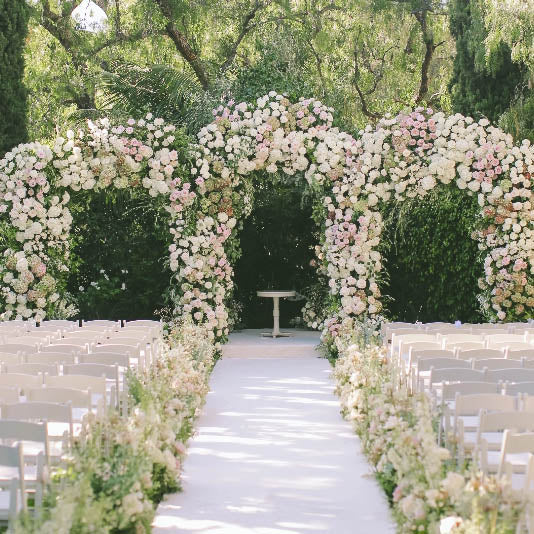
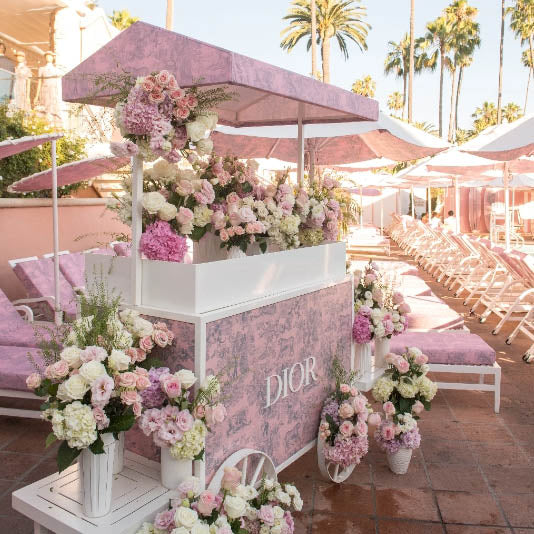
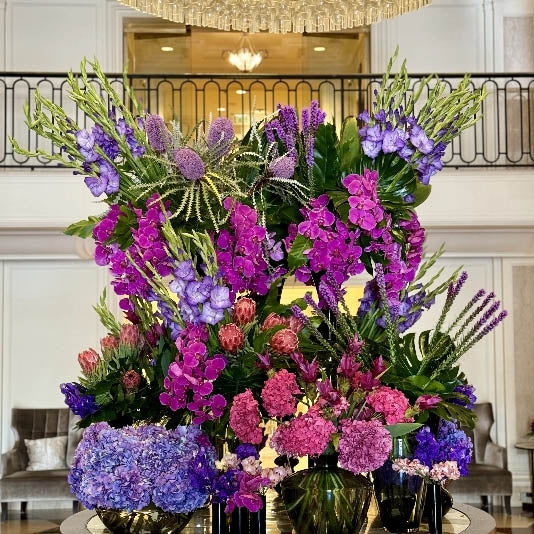
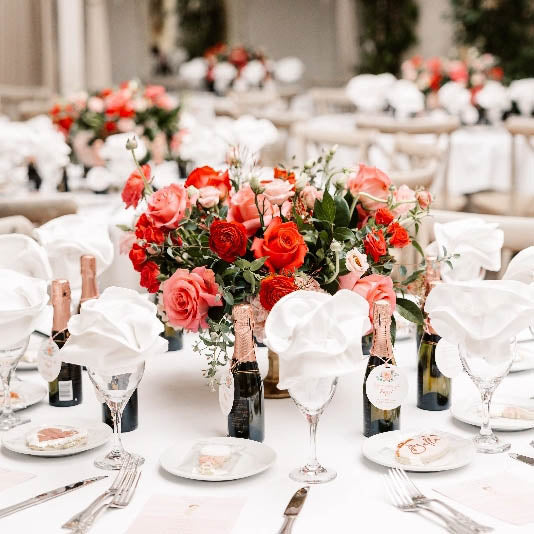

If I had to name the one flower that makes everyone, and I do mean everyone, stop in their tracks, it would be the peony. Brides cry over them. Hotel guests photograph them. My corporate clients ask for them by name. There is something about that lush, ruffled, almost impossibly full bloom that turns the most composed people into giddy flower lovers.
So let’s talk about peony season, where they come from, the best substitutes when they’re gone, the surprising spots you can find them cheap, and how to make them last. After 26 years of running The Hidden Garden, I’ve learned a thing or two about this flower. Here’s everything you actually need to know.
When Are Peonies in Season? (The Answer Will Surprise You)

Image: Hidden Garden's Petals Of Romance
Most people think peonies are only available a few weeks a year. The truth is, with the right sourcing, you can find fresh peonies for a much bigger chunk of the calendar than you’d expect.
May and June are the heart of peony season for us in the U.S. This is when the largest commercial volume hits the market. The Netherlands is the powerhouse here. The Netherlands produces 40 percent of the world’s cut peonies, with indoor-grown peonies starting in mid-April and May, and June and July as the peak months. France also kicks in earlier in the spring with beautiful varieties like Festiva Maxima and Coral Charm.
Late June into July brings the Oregon harvest. Fresh cut peonies from Oregon are typically available from mid-May through June, with some farms extending slightly into early July depending on the weather.
July and August is when the magic of Alaska takes over. Alaska is the only place in the world with peonies in July, August, and September. The endless summer daylight up there produces some of the largest, most saturated blooms you’ll ever see. Alaska peonies typically ship from late June through the end of August.
November through January is the Southern Hemisphere season. New Zealand peony season runs from early October to mid-December, and Chile and Australia also send peonies our way during this stretch. This is why your December event can absolutely still feature peonies if you plan ahead.
So yes, peonies have an off season, but a knowledgeable florist can source them for far more of the year than people realize.
The Best Peony Substitute: Garden Roses
When peonies aren’t available, or when the budget needs to stretch, garden roses are your best friend. The ruffled, high petal count look is what makes them such a strong dupe. Here are my favorite garden rose varieties that genuinely fool the eye:
-
Yves Piaget: deep pink, big, fragrant, and absolutely peony-like
-
Coral Expression: gorgeous coral tones for that Coral Charm peony vibe
-
Antoinette: soft, romantic, blush perfection
-
Baroness: full and ruffled with that classic peony silhouette
-
Princess Charlene de Monaco: blush pink with hundreds of petals
-
Pink O’Hara: soft pink, fragrant, and one of the most popular peony stand-ins in the industry
-
Romantic Antike: pale pink and cream with that romantic, garden grown feel
The beauty of garden roses is that the Ecuadorian farms are now growing these varieties year round, which means you can pull that peony look in January, March, or August, no problem.
One of my favorite farms is actually just a couple of hours north of us. Grace Rose Farm in Ventura County, California, is a true gem. Based in Ventura County with over 30,000 heirloom rose bushes, they work with breeders from around the world and harvest their own spectacular roses for weddings, events, and local flower lovers. Their website is worth a deep dive if you’re a rose lover. The quality is unreal.
Yes, I’m Going to Tell You About Trader Joe’s Peonies
I cannot believe I’m saying this, but here we go. Trader Joe’s. For a few weeks each year, usually right in the heart of peony season, Trader Joe’s has stupidly cheap peonies. We’re talking around two dollars a stem. As someone who buys peonies wholesale for a living, even I notice when those bunches show up.
Here’s the inside scoop. Grocery stores buy peonies when the market is “flushing,” meaning supply is so abundant that prices drop fast. Flowers are also a loss leader at most grocery chains. During peony season, Trader Joe’s has them almost every day, prices are amazing, and they last a really long time. They use those gorgeous peonies to get you in the door, knowing you’ll grab a bottle of wine and some specialty cheese on your way out.
So for those couple of weeks a year when you spot them? Grab a few bunches. Why not. It’s one of the few times in life you can enjoy a luxury flower at grocery store pricing.
The Stunning Color Range of Peonies

Image: Hidden Garden's Darling Bloom
People always think of pale pink when they picture peonies, but the color range is wild. There are peonies in nearly every shade you could imagine, and the bloom sizes vary just as much, from elegant single-petal varieties to those huge, double bombs that open up the size of your hand.
A few of my all-time favorites:
-
Coral Charm: starts deep coral, fades to peach, ends in a soft cream blush (more on this magic in a minute)
-
Kansas: a true deep red, perfect for moody, romantic palettes
-
Bowl of Cream: huge, pure white, slightly cupped, just stunning
-
Sarah Bernhardt: the classic soft pink, ruffled, fragrant, and timeless
-
Duchesse de Nemours: pure white, fragrant, a wedding favorite
-
Festiva Maxima: white with a kiss of crimson at the center
-
Red Charm: deep, rich red with a fully packed bomb form
-
Karl Rosenfield: bright magenta pink for when you want drama
-
Mother’s Choice: ivory white, full, and perfect for romantic designs
-
Bartzella (intersectional): a stunning yellow peony, rare and gorgeous
The variation in head size, petal count, and color tone is what makes peonies so versatile in design work. A single open Bowl of Cream can carry an entire centerpiece on its own.
Why a Few Peonies Go a Long Way
Peonies are not an inexpensive flower. Wholesale, they can run anywhere from five to fifteen dollars a stem depending on the variety, season, and source. So I always tell clients: you don’t need a hundred peonies to make an impact.
Once a peony opens fully, the head can be as big as the palm of your hand. Three or five open peonies in a vase will absolutely steal the show. Mix them with garden roses, ranunculus, sweet peas, or lush greenery and you’ve created something extraordinary without blowing the budget.
This is one of the most common things I coach brides and event clients on. You don’t need volume. You need the right placement of those statement blooms.
The Magic of Coral Charm (Watch It Transform)

Image: The Hidden Garden's Coral Garden
If you have never lived with a Coral Charm peony in your home for a week, you are missing one of the most beautiful experiences in the floral world.
Coral Charm starts as a tight, deep coral, almost orange-toned bud. As the days pass and it begins to open, the color softens. The deep coral fades to a brighter peach, then to a pale, dusty apricot, and finally to the palest, almost translucent peach right before the petals release.
It is one of the most unique flowers to watch bloom over the week in a vase. I tell clients to put them somewhere they’ll see them every morning, because the transformation is genuinely stunning. Every day looks like a different flower.
Don’t Buy Peonies That Are Too Tight
This is one of the most important things I can teach you. If you’re buying peonies and the buds feel hard, like a marble or a walnut, walk away. Those will never open in your vase. They’ll just sit there, stubborn and closed, until they shrivel.
What you’re looking for is the marshmallow stage. The bud is fully developed and rounded with a bit more color starting to show, the outer sepals (the green outermost petals) are just starting to separate, and when you gently squeeze the bud, it feels slightly squishy, like a marshmallow.
If the bud feels hard like a marble or stone, it’s too early. The flower hasn’t developed enough sugars to open properly. Cutting too early may result in buds that never bloom.
Here’s the quick test: gently squeeze the bud between your thumb and forefinger. If it gives slightly under pressure, you’ve got a winner. Many buds will feel rigid and unyielding, like a glass marble hidden under a layer of soft green tissue. Leave those hard buds alone, because cutting them now means they will never open.
The marshmallow squeeze test is the single best skill you can learn when buying peonies.
How to Make Your Peonies Last (Water, Cutting, Vase Life)
A well-cared-for peony can last seven to ten days in a vase. Here’s how to get there.
1. Cut the stems on a sharp diagonal. This maximizes water absorption. Use clean, sharp shears, never dull scissors, because crushed stems can’t drink properly.
2. Trim about an inch off the stem under running water or directly in water. Air bubbles in the stem block hydration. This step alone can add days to your vase life.
3. Strip all foliage below the waterline. Leaves rotting in water turn your vase cloudy and shorten the life of every flower in it.
4. Use cool, fresh water. Add flower food if you have it. If you don’t, a clean vase and fresh water is plenty.
5. Change the water every two days. Peonies are heavy drinkers, and clean water is non-negotiable for vase life.
6. Keep them in a cool spot. Away from direct sunlight, heat vents, and ripening fruit. Fruit releases ethylene gas, which ages your flowers faster.
7. Want them to open faster? Move them to a warm, sunny room for a few hours. They’ll pop open in front of your eyes. This is the trick I use when a client has an event tomorrow and the peonies are still in tight bud.
8. Want them to slow down? Pop them in the fridge overnight. Yes, really. You can actually store cut peonies in water in your refrigerator for up to a couple of months. I use this trick all the time when peonies arrive ahead of an event.
With proper care, fresh-cut peonies typically last five to seven days, and with the right conditioning, you can stretch them closer to ten.
The Bottom Line on Peonies
Peonies are worth every penny. They’re the flower that turns an arrangement into a moment, a wedding into a memory, a Tuesday into something beautiful. Whether you’re buying a few stems from Trader Joe’s during that magical two-week window, splurging on Alaskan giants in July, or ordering them through your florist for a December event from New Zealand, peonies are far more available than most people realize.
And when they’re not? Garden roses are waiting in the wings, every bit as ruffled, romantic, and luxurious.
If you’re planning a wedding, event, or even just want to surprise yourself with the most stunning flower in the world, reach out to us at The Hidden Garden. We source peonies year round for our luxury clients, hotels, weddings, and private homes. There’s a reason this flower has been beloved for centuries. Once you’ve lived with one, you understand exactly why.
Order here for peony delivery in Los Angeles.